
Choose an SUV That Is Easier and Safer for Older Drivers
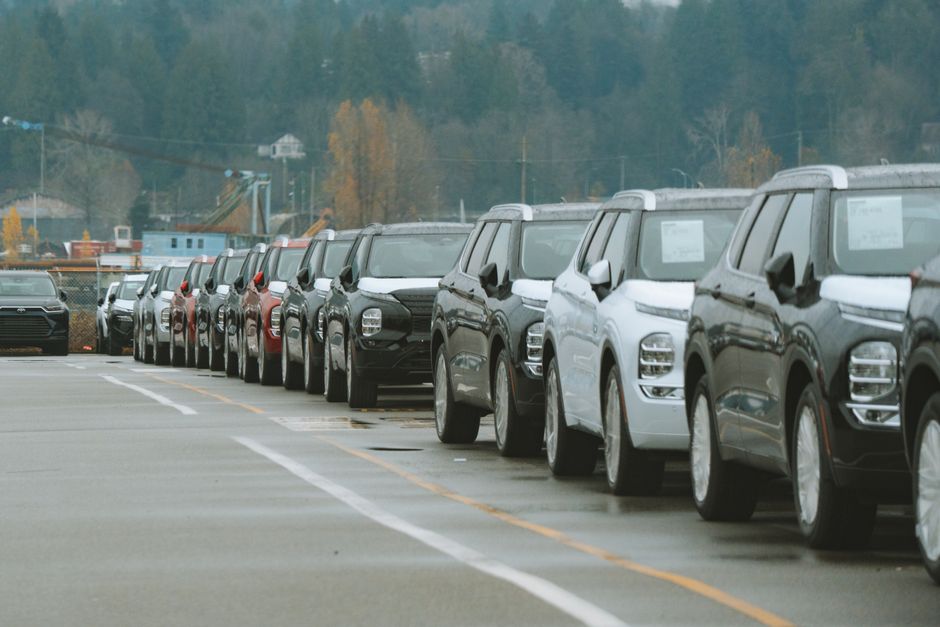
The easiest SUV for an older person is not automatically the tallest one. Choose a vehicle with a seat positioned between the mid-thigh and lower buttocks, a low door threshold, a door opening that allows an unhurried exit, adjustable seating, and safety technology that supports rather than replaces attention. Test the exact vehicle with the driver or passenger who will use it most.
That last point carries the decision. An SUV can look accessible from the curb and still create a difficult twist under the roof rail or a long drop to the ground. Public research does not identify one best SUV model for every older driver, so the smarter move is to evaluate the physical fit and the controls in the specific vehicle you are considering.
What SUV is easiest for an elderly person to get in and out of?
The easiest SUV is the one whose seat height, sill position, roof-rail clearance, and adjustability let the person enter and exit with the least strain. The word SUV is too broad to answer the question by itself. A vehicle that is taller on the outside can still be harder to use if its floor is high or the roof line crowds the exit path.
A study of 48 adults ages 67 to 89 found that vehicle-seat height relative to the ground, along with the seat's location relative to the sill and roof rail, significantly affected discomfort and the time required to enter or exit. The researchers also found that longer egress time was associated with greater perceived discomfort. That gives you a practical rule: do not judge from a showroom glance. Time a normal exit, then repeat it after the person has been seated for several minutes.
Run the Exit-First Drill during the test drive. Have the prospective driver or passenger enter without being pulled or lifted. Once seated, adjust the seat and belt. Then get out, close the door, and repeat. Watch for a deep drop into the seat, a high lift of the leg over the sill, head contact or ducking under the roof rail, and a painful pivot on exit. Those are usability costs, not minor annoyances.
AAA's guide for older drivers points to seats positioned between the mid-thigh and lower buttocks, low door thresholds, and low-friction leather or faux-leather upholstery as features that can make entry and exit easier. It also recommends a six-way power seat for people managing hip or leg pain, reduced leg strength, limited knee range of motion, or neuropathy.
| Option to compare | Who it suits | Cost | Key limitation |
|---|---|---|---|
| Seat positioned between the mid-thigh and lower buttocks | People who need an easier sit-down and stand-up motion | Not published | Fit must be checked in the actual vehicle |
| Low door threshold | People who have difficulty lifting legs over a high sill | Not published | Threshold height is only one part of entry and exit |
| Six-way power seat | People with hip or leg pain, reduced leg strength, limited knee range of motion, or neuropathy | Not published | Adjustment range must still provide a safe driving position |
| Rearview camera and parking sensors | Drivers seeking more rearward information while parking or backing | Not published | Must supplement mirrors and visual checks |
The same daily-use standard applies when evaluating other major household purchases, including whether a convertible sofa bed can work as your everyday primary bed. The question is not whether a feature exists. The question is whether it removes effort every time the person uses it.
Are higher SUVs always easier for seniors to enter?
No. A raised seat can reduce bending, but a vehicle that is too high creates a climb-in problem instead of a sit-down problem. The useful target is a controlled, natural transfer from standing to seated, followed by an exit that does not require a long drop, a high step, or a cramped twist.
This is where caregivers can protect the buyer from a common showroom mistake: assessing entry only once, when everyone is fresh and the door is wide open. Ask the person to use the vehicle as they would on an ordinary errand. Bring any mobility aid they normally use. Check whether they can reach the door pull, position their feet, settle into the seat, buckle up, and exit without rushing.
Use this caregiver script: “Please get in and out at your normal pace. Do not push through discomfort just to finish the test.” Then ask three direct questions: “Where did you feel strain?” “Did you need to hold the door, seat, or steering wheel for balance?” and “Would this be manageable after a long appointment?” The answers are more valuable than a generic claim that a vehicle has a high seating position.
Set up the driving position before calling the test complete. AAA advises maintaining at least 10 inches between the chest and steering-wheel airbag. Power seat adjustment, adjustable pedals, and a tilt/telescoping steering wheel can help establish that fit. If the driver cannot obtain both comfortable pedal reach and appropriate airbag distance, move on. A comfortable entry is not enough if the seated driving position is compromised.
Which SUV has the best visibility for older drivers?
The SUV with the best visibility for an older driver is the one that provides a clear forward view, usable mirrors and rear window, and easy-to-understand camera and warning systems without asking the driver to trust electronics blindly. No source provided here ranks individual SUV models for visibility, so compare the actual view and displays rather than relying on a model-size label.
Visibility deserves extra weight because the Insurance Institute for Highway Safety reports that inadequate surveillance, including looking but not seeing or failing to look, was the most frequent error among crash-involved drivers age 70 and older in a nationally representative study. IIHS also reports that multiple-vehicle intersection crashes made up 43% of fatal crashes involving drivers age 80 and older in 2024, compared with 24% for drivers ages 16 to 59.
Build a Visibility Stack. First, check the natural sightlines: can the driver see over the steering wheel, through the rear window, and into both side mirrors without straining? Second, evaluate the assistance tools: AAA recommends large wide-angle mirrors, a large rear window, a rear camera, and front and rear sensors for drivers with limited neck, shoulder, back, or upper-body range of motion. Third, make sure the warnings are understandable before the vehicle is moving.
IIHS research on advanced driver assistance reports that forward-collision warning combined with automatic emergency braking cut rear-end crashes in half, while forward-collision warning alone reduced them by 27%. Blind-spot detection reduced lane-change crashes by 14%. These are meaningful support systems, not self-driving substitutes: IIHS states that drivers must remain ready to respond.
Test the rear camera in conditions that reveal its limits. In an NHTSA survey, 96% of rearview-camera owners found cameras easy or very easy to use, but some reported poor performance in bright sun, darkness, and fog. NHTSA also found that some users relied on the camera without checking mirrors or looking rearward. The correct replacement behavior is simple: use the camera for a wider view, then confirm with mirrors and a visual check before backing.
Safety technology should match the person's needs, not their birth year. NHTSA's older-driver guidance is explicit that driving decisions should never be based on age alone; vision, physical fitness, attention, reaction ability, medical conditions, and mobility needs should be assessed individually. That is the standard a caregiver should bring to the test drive.
Frequently Asked Questions
What seat height is best for someone with arthritis or knee pain?
AAA identifies a seat positioned between the mid-thigh and lower buttocks as a feature that can make entry and exit easier. The right height is personal: the driver should be able to sit down and stand up without dropping into the seat or climbing upward. A six-way power seat can help people with hip or leg pain, reduced leg strength, limited knee range of motion, or neuropathy fine-tune that position.
Which safety features matter most for senior drivers?
Rearview cameras, rear parking sensors, blind-spot detection, lane-departure warning, and forward-collision warning with automatic emergency braking are practical priorities. IIHS reports that rearview cameras and rear parking sensors are especially effective for drivers age 70 and older in preventing police-reported backing crashes. These systems assist the driver; they do not replace mirrors, visual checks, or attention.
Should an older driver choose a compact SUV or a midsize SUV?
Choose the vehicle that the individual can enter, exit, see out of, park, and fit correctly, rather than choosing by size alone. The provided public sources do not establish that compact or midsize SUVs are universally better for older drivers. Compare the actual seat height, door opening, visibility, adjustment range, and safety features in the specific vehicles under consideration.
This week's assignment: schedule one unhurried test drive and run the Exit-First Drill and Visibility Stack before discussing price. Ask the driver or passenger to name the one movement that felt hardest. That answer should shape the shortlist.
Sources
- Innovations in Aging / PubMed Central: Vehicle ingress and egress study
- Insurance Institute for Highway Safety: Older Drivers
- Insurance Institute for Highway Safety: Advanced Driver Assistance
- National Highway Traffic Safety Administration: Older Drivers
- National Highway Traffic Safety Administration: Backing Aids and Rear-View Cameras
- AAA: Smart Features for Older Drivers