
What Is the Difference Between Pickup and Truck?
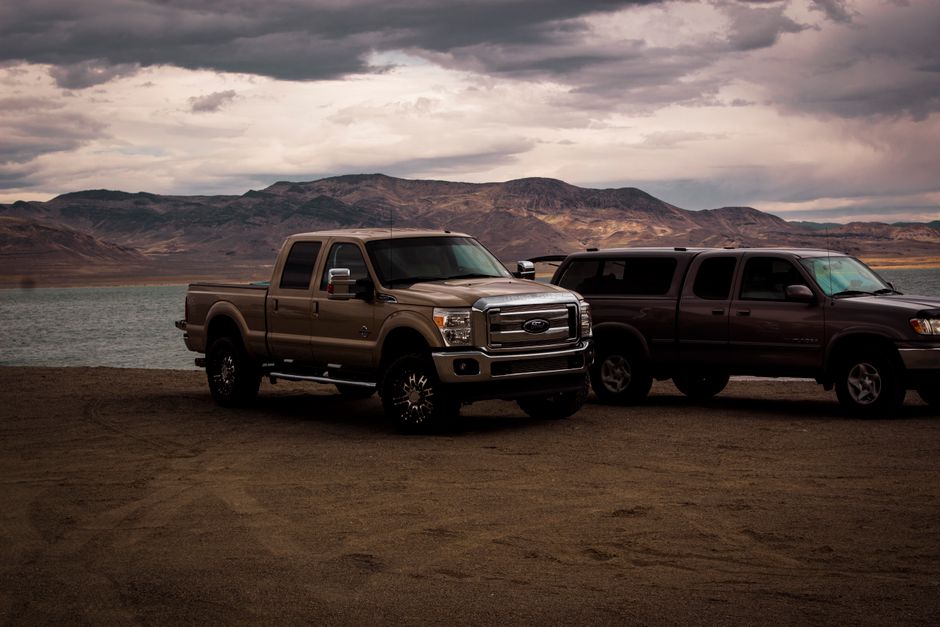
The difference between pickup and truck is that “truck” is the broader category, while a pickup is one specific kind of truck. A pickup has a passenger cab and an open cargo bed; box trucks, dump trucks, vans and tractor-trailers have different bodies or jobs. In everyday speech, people often say “truck” to mean pickup, but technical classifications depend on design, weight rating and use.
Is a pickup considered a truck?
Yes. A pickup is considered a truck, specifically a truck with a passenger compartment and an open cargo bed. The federal definition in 49 CFR Part 523 describes a pickup truck as a non-passenger automobile with a passenger compartment and an open cargo area, or bed.
That definition gives you a useful first check: look at the body layout. A cab followed by an open bed points to a pickup. A truck does not need to be a large commercial vehicle or a semi to count as a truck.
“Pickup” identifies a particular body style; “truck” names a wider family. Federal rules separately identify pickups, vans, vocational vehicles and truck tractors. Those categories help distinguish a vehicle’s construction and function, even when everyday speech uses the same broad label for several of them.
Is a pickup truck different than a truck?
A pickup truck is different from some other trucks, but it is not outside the truck category. The practical distinction is usually the body and job: pickups combine a passenger cab with an open bed, while other trucks may use enclosed, lifting or trailer-pulling equipment.
Manitoba Public Insurance’s truck body-style guide lays out the visual differences. A box truck carries cargo in an enclosed body mounted on the chassis. A dump truck has a container that can be raised mechanically to unload. A tractor is equipped to pull a semi-trailer.
Use this quick identification guide when a vehicle’s name is unclear:
- Pickup: passenger cab and open bed. The bed may be integrated into the vehicle’s structure or attached as part of a separate body layout; the visible cab-and-bed arrangement is the key clue.
- Van: an enclosed body designed for passengers, cargo or both. Federal rules list vans separately from pickups, including in heavy-duty categories.
- Box or dump truck: an enclosed cargo box signals a box truck; a load container built to lift and discharge cargo signals a dump truck.
- Truck tractor: equipment for pulling a semi-trailer, rather than a pickup-style open bed for carrying cargo.
Size alone does not settle the question. Manitoba Public Insurance classifies light pickups as those with a manufacturer GVWR of 4,540 kg or less and heavy pickups as those over 4,540 kg. The EPA and NHTSA also describe heavy-duty pickup trucks and vans in Classes 2b and 3, with GVWRs from 8,501 to 14,000 pounds. These examples show why “pickup” describes a body type while weight classes describe a separate feature.
Why do people call trucks pickups?
People call this kind of truck a pickup because “pickup body” became an early name for the open cargo-bed configuration. The term arose from a specific vehicle design, not from a rule that every truck must be a pickup.
The Henry Ford records that Ford introduced its light-duty Model T runabout pickup in April 1925. The factory-installed steel bed measured 56 inches by 40¾ inches, had an adjustable tailgate and four stake pockets, and the vehicle cost $281. Ford sold nearly 33,800 in the first year, making the model a concrete early example of a factory-built pickup.
Ford’s historical account likewise says the Model T Runabout offered a pickup body beginning in 1925 and distinguishes it from the heavier Model TT truck chassis. That distinction captures the terminology: a pickup body could be fitted to a vehicle, while “truck” also covered other commercial forms. The sources establish this early use; they do not show that one event created every later use of the word.
Can you call a pickup truck a truck?
Yes. Calling a pickup “a truck” is accurate in ordinary conversation and consistent with its recognized vehicle category. If the distinction matters, say “pickup truck” for the open-bed vehicle and name the other body or setup—such as box truck, dump truck or tractor-trailer—for a more specific description.
The word alone does not tell you how much a vehicle weighs, what it can tow or what license its driver needs. Federal GVWR classes begin with Class 2b at 8,501 to 10,000 pounds; Class 3 through Class 8 begin at 10,001 pounds. Those are rating categories, not a shortcut for identifying every vehicle by appearance.
Licensing is another separate question. The Federal Motor Carrier Safety Administration explains that a Class A CDL generally applies to a combination rated at 26,001 pounds or more when the towed unit exceeds 10,000 pounds GVWR. A Class B generally applies to a single vehicle rated at 26,001 pounds or more, or such a vehicle towing a unit rated at 10,000 pounds or less. Class C applies to qualifying vehicles carrying 16 or more people, including the driver, or transporting placardable hazardous materials.
For a real vehicle, check its GVWR and how it will be used, then confirm the rules where it is registered and operated. FMCSA notes that states may use more restrictive license categories or additional endorsements and restrictions. The practical answer is simple: classify the body by what you see, but check licensing against the rating, operation and jurisdiction.
Frequently Asked Questions
Does truck mean a semi-truck or any vehicle built to haul cargo?
Truck can refer broadly to vehicles designed for carrying cargo or performing work, including pickups, box trucks and dump trucks. A semi-truck usually refers to a tractor pulling a semi-trailer, a distinct setup in which the tractor is primarily designed to pull the trailer.
What physically makes a pickup different from a delivery or dump truck?
A pickup has a passenger cab and an open bed behind it. A box truck has an enclosed cargo body mounted on its chassis, while a dump truck has a container designed to lift mechanically to unload.
Do pickups and larger trucks have different license requirements?
They can, but the vehicle’s rating and how it is operated matter more than its everyday name. Federal CDL thresholds include the vehicle’s GVWR and, for combinations, the towed unit’s rating; states may set more restrictive rules.
Sources
- Electronic Code of Federal Regulations, 49 CFR Part 523
- Manitoba Public Insurance, Truck body styles
- The Henry Ford, 1925 Ford Model T Pickup Truck
- Ford Motor Company, The Model T: Born in Secrecy, Built for the World
- U.S. Environmental Protection Agency and National Highway Traffic Safety Administration, Phase 2 Heavy-Duty Vehicle Standards
- Federal Motor Carrier Safety Administration, Drivers
Read next

Can I Finance a Used Car With Zero Down Payment?
A practical guide to qualifying for a zero-down used-car loan, comparing offers, and avoiding costly negative equity.
How Can I Run GMC Savana Explorer Accessories Without Draining the Starter Battery?
Set up auxiliary power for a GMC Savana Explorer so cabin accessories can run while camping without draining the starter battery.
Choose an SUV That Is Easier and Safer for Older Drivers
A practical SUV guide for older drivers and caregivers: test entry, seat fit, visibility, and safety technology before buying.